

TL;DR:
- Healthcare market research involves collecting and analyzing data to improve patient outcomes and strategic decisions. However, most teams lack integration of data streams like calls, web behavior, and CRM, hindering accurate measurement of marketing effectiveness. Connecting these sources and adopting continuous research practices are essential for closing the outcome gap in healthcare marketing.
Healthcare market research is the structured process of gathering and interpreting data specific to the healthcare sector to drive better business and patient outcomes. It covers everything from patient behavior and payer dynamics to competitive positioning and product launch readiness. Yet despite its strategic value, only 1% of healthcare marketing leaders can connect more than half of their marketing spend to actual patient outcomes. That gap is not a data problem. It is a methodology problem. This guide breaks down how to fix it.
What is healthcare market research and why does it matter?
Healthcare market research is the systematic collection and analysis of data to understand market dynamics, patient needs, and competitive forces within the healthcare sector. The formal industry term is primary and secondary market research applied to health systems, though “healthcare market research” is the widely accepted shorthand across pharma, biotech, MedTech, and health systems alike.
The stakes are unusually high in this sector. Decisions informed by poor or incomplete research affect not just revenue but patient access, treatment timelines, and clinical outcomes. Platforms like IQVIA, CMS claims databases, and validated medical content networks each serve a different layer of the research stack. No single source gives you the full picture.
For healthcare professionals and decision-makers, the core purpose of this research is threefold: understand what patients and providers actually need, identify where competitors are gaining ground, and allocate resources toward strategies that produce measurable results.
What are the main methodologies used in healthcare market research?
Healthcare industry analysis draws on four core methodological categories. Each has a distinct role, and the most effective research programs combine at least two.

Primary research involves direct data collection from patients, providers, payers, or caregivers through surveys, in-depth interviews, and focus groups. This method produces original insights tailored to your specific question. It is the only way to understand local market dynamics, stakeholder relationships, and nuanced attitudes that no syndicated report will capture.
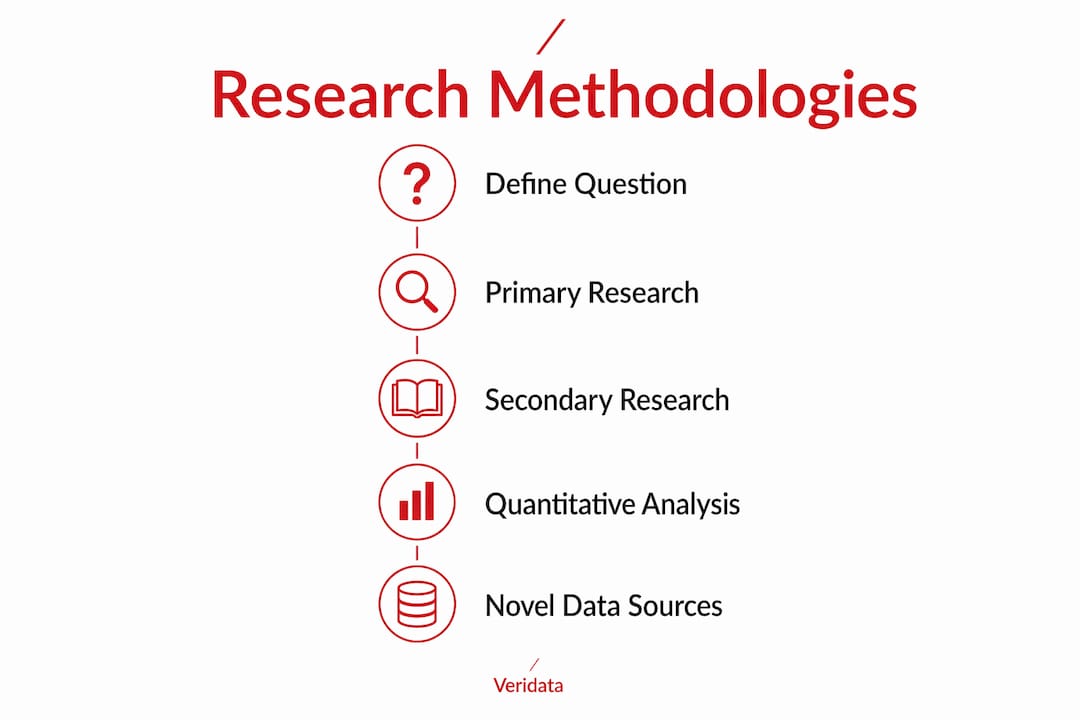
Secondary research uses existing data sources: CMS claims data, FDA filings, peer-reviewed literature, IQVIA databases, and published industry reports. It is faster and less expensive than primary research but carries a significant limitation. Generic industry reports are insufficient to capture local market dynamics and stakeholder relationships essential for outcomes like formulary placement and network inclusion.
Quantitative research produces statistically significant findings from large sample sizes. Think structured surveys with 500-plus respondents, claims data analysis, or digital engagement metrics. Qualitative research goes deeper with smaller groups, exploring the “why” behind behaviors through ethnographic interviews or online communities.
| Methodology | Best for | Key limitation |
|---|---|---|
| Primary surveys | Custom patient or provider insights | Time and cost intensive |
| CMS claims data | Population-level utilization trends | Lags real-time market shifts |
| Qualitative interviews | Stakeholder attitudes and motivations | Not statistically projectable |
| Social media listening | Organic patient sentiment | Requires careful interpretation |
| Phone call tracking | Appointment conversion analysis | 91% of teams lack integration with web analytics |
Novel data sources are gaining ground fast. Phone call tracking, social media engagement in condition-specific communities, and digital content consumption metrics now complement traditional methods. The challenge is integration, not availability.
Pro Tip: Before selecting a methodology, write out your decision question in one sentence. If you cannot state what decision the data will inform, the research design will drift and the findings will be ignored.
How do healthcare marketing research trends and challenges impact decision-making?
The measurement environment for health care market research has changed significantly heading into 2026. Three forces are reshaping how teams collect, interpret, and act on data.
The phone gap is real and costly. Approximately 80% of healthcare appointments are booked by phone, yet phone conversation data is poorly tracked by most marketing teams. This means the majority of patient acquisition activity is invisible to analytics platforms. You cannot optimize what you cannot see.
Platform authority is now a budget priority. 45% of pharma marketers are increasing investment in platforms with authoritative and validated medical review, and 93% require influencer partners to use validated medical and regulatory review systems. This reflects a broader shift: credibility is now a distribution strategy, not just a compliance checkbox.
Engagement depth beats click volume. Time spent on validated medical content in patient communities is a better indicator of movement toward treatment than high-level click metrics. A patient who spends 12 minutes reading a condition overview is closer to a treatment decision than one who clicks and bounces in 30 seconds. Most analytics stacks are still measuring the wrong thing.
Compliance pressures add another layer of complexity. Cookie deprecation, HIPAA restrictions, and CCPA requirements are narrowing the data collection window for digital channels. Teams that relied on third-party audience data for targeting and measurement are now rebuilding their measurement frameworks from scratch.
“Current web analytics stacks fail to provide complete performance views without offline data integration, leading to suboptimal decisions.” — State of Healthcare Marketing 2026
Pro Tip: Integrate call tracking data with your CRM and web analytics platform. Even basic call attribution, matched to campaign source, will reveal which channels are actually driving appointments versus which ones just drive traffic.
What are the practical applications of healthcare market research?
Medical market insights translate into real decisions across every segment of the industry. Here is how different stakeholder groups put research to work.
- Pharmaceutical companies use bespoke primary research to inform formulary placement strategy. Understanding which clinical evidence a pharmacy and therapeutics committee prioritizes, and which competitors are already on formulary, requires direct interviews with payers and medical directors. No syndicated report replaces that conversation.
- MedTech companies rely on healthcare consumer behavior data to size markets and prioritize geographies. A device manufacturer entering a new hospital system needs to know procurement decision structures, budget cycles, and clinical champion profiles before a single sales call.
- Health systems and payers use market research to evaluate network inclusion decisions and service line expansion. The US health system’s complexity requires specialist primary research tailored to specific stakeholder questions for effective strategy and market access planning.
- Oncology and rare disease teams invest heavily in patient community research. In these therapeutic areas, marketing investment focuses on patient communities and endemic platforms to accelerate time to treatment through deep engagement. Understanding where patients seek information, and what content keeps them engaged, directly shapes channel strategy.
- Biotech companies in early commercialization use competitive intelligence research to map the treatment algorithm and identify where a new therapy fits. This includes qualitative interviews with key opinion leaders and quantitative surveys with community physicians to gauge awareness and prescribing intent.
The common thread across all these use cases is specificity. Macro healthcare market trends from a published report tell you what is happening broadly. Bespoke primary research tells you what is happening in your specific market, with your specific stakeholders. Both matter, but only one drives the decisions that move the needle on formulary placement outcomes.
How to plan and execute healthcare market research effectively
Effective health research strategies share a common structure. The execution details vary by budget and timeline, but the framework holds across project types.
- Define the decision first. Every research project should start with a clear statement of the business or clinical decision it will inform. “We want to understand the market” is not a research objective. “We need to know whether hospital pharmacists in the Southeast prioritize cost or clinical differentiation when evaluating formulary additions” is.
- Match methodology to question. Quantitative surveys work for measuring awareness, preference, and market sizing. Qualitative interviews work for understanding motivations, barriers, and unmet needs. Mixing both in a sequential design, qualitative first to build hypotheses, quantitative second to validate them, produces the strongest findings.
- Recruit the right participants. Healthcare audiences are notoriously hard to reach. Physicians, nurses, payers, and patients each require different recruitment strategies. Incentive structures, screening criteria, and panel quality all affect data integrity. Veridatainsights specializes in recruiting healthcare participants across B2B and B2C healthcare segments, including hard-to-reach specialist audiences.
- Integrate digital and offline data streams. Do not let your web analytics and your call tracking live in separate silos. The teams that connect these data sources get a complete view of the patient acquisition funnel. Those that do not are making channel investment decisions with half the data.
- Avoid over-relying on generic reports. Published industry reports are useful for context and macro trend identification. They are not a substitute for primary research when the decision involves local market dynamics, specific stakeholder relationships, or competitive positioning in a defined geography.
- Measure what drives outcomes, not just activity. 80% of pharma marketers expect stable or increased budgets in 2026, with a focus on full-funnel accountability linking reach to prescription lift and ROI. That accountability standard should apply to your research investment too. Track whether research findings actually changed a decision, not just whether a report was delivered.
Pro Tip: Build a short “decision log” alongside every research project. Record what decision was made, what the research said, and what actually happened. After three to five projects, patterns emerge that improve your research design and your confidence in acting on findings.
Key takeaways
Effective healthcare market research combines bespoke primary research with integrated data streams to connect marketing spend directly to patient outcomes and strategic decisions.
| Point | Details |
|---|---|
| Define the decision first | Every research project must start with a specific business or clinical decision it will inform. |
| Integrate offline data | Phone call data and web analytics must be connected to avoid invisible patient acquisition gaps. |
| Prioritize bespoke research | Generic reports miss local market dynamics essential for formulary placement and network inclusion. |
| Measure engagement depth | Time spent on validated medical content predicts treatment movement better than click metrics. |
| Match method to question | Use qualitative research for motivations, quantitative for validation, and combine both for strongest results. |
Why the measurement gap is the real story in 2026
The most striking finding I keep coming back to is that only 1% of healthcare marketing leaders can connect more than half of their spend to patient outcomes. That number should be alarming to anyone who signs off on a marketing budget. We have more data available than at any point in history, and yet the connection between investment and outcome is almost completely opaque for most teams.
The reason is not a lack of data. It is a lack of integration. Phone calls, web sessions, CRM records, and claims data all exist in separate systems, and almost nobody has built the infrastructure to connect them. The teams that do this work, even imperfectly, make dramatically better decisions than those that rely on last-click attribution and quarterly reports.
My advice for healthcare decision-makers in 2026 is to stop treating research as a one-time project and start treating it as a continuous feedback loop. The market is moving too fast for annual studies. Patient behavior, payer priorities, and competitive dynamics shift faster than a 12-month research cycle can capture. Build the habit of small, frequent, targeted research sprints alongside your larger strategic studies. You will be surprised how quickly the picture sharpens.
— Daniel
How Veridata Insights supports your healthcare research needs
Veridatainsights brings the same rigor to healthcare market research that the sector demands. Whether you need a full-service quantitative study with 500 physician respondents or a focused qualitative deep-dive with rare disease patients, Veridata Insights designs and executes research that connects to real decisions. There are no project minimums, and the team is available seven days a week. From questionnaire design and recruitment to data processing and brand measurement metrics, Veridata Insights handles the full research lifecycle. If you are ready to close the gap between marketing spend and patient outcomes, start the conversation today.
FAQ
What is healthcare market research?
Healthcare market research is the systematic collection and analysis of data to understand patient needs, market dynamics, and competitive positioning within the healthcare sector. It includes both primary research methods like surveys and interviews, and secondary methods like CMS claims data and industry databases.
Why can’t most healthcare teams connect marketing spend to patient outcomes?
Only 1% of healthcare marketing leaders can link more than half of their spend to patient outcomes, primarily because phone call data, web analytics, and CRM systems remain disconnected. Integrating these data streams is the single highest-impact step most teams can take.
What is the difference between primary and secondary healthcare research?
Primary research collects original data directly from patients, providers, or payers through surveys, interviews, or focus groups. Secondary research analyzes existing data sources like IQVIA databases or CMS claims. Primary research is more expensive but captures local market dynamics that secondary sources miss.
How do pharma companies use healthcare market research?
Pharma companies use bespoke primary research to inform formulary placement, understand payer priorities, and map treatment algorithms. In oncology and rare disease, research focuses on patient communities and endemic platforms to measure deep engagement and accelerate time to treatment.
What are the biggest challenges in healthcare marketing research today?
The three biggest challenges are: the phone data gap (80% of appointments booked by phone go untracked), cookie deprecation limiting digital tracking, and HIPAA and CCPA compliance constraints. Teams that build offline data integration and invest in pharmaceutical research compliance gain a measurable advantage.