


Digital fingerprinting for surveys means using device and browser signals as a duplicate and fraud risk signal. Treat it as one input in a layered fraud-detection program, never as a definitive identifier. It catches repeat respondents that email checks miss, but its reliability shifts with browser updates and privacy defenses, and it raises privacy duties you must plan for.
TL;DR:
- Mobile samples can produce less reliable fingerprints because phones often share similar attributes, so measure false matches separately across mobile and desktop respondents.
- Set conservative risk tiers: a fingerprint match should trigger review, while automatic blocking should require stronger evidence, such as speeding and a failed attention check.
- Tell participants why device signals are checked, limit collection and retention, prohibit marketing use, and document human review plus an appeal route for duplicate flags.
- Retest after major browser releases and when flag rates shift; population and collection methods can change apparent uniqueness, making borrowed thresholds unreliable.
- Hashing can reduce direct use of names or email addresses, but shared devices and changing attributes still complicate matching, so treat collisions as review flags.
Table of Contents
- How does device and browser fingerprinting work?
- What privacy controls should you apply?
- How does fingerprinting fit into a layered fraud workflow?
- Can you dedupe without storing personal data?
- How do you validate and monitor performance?
- What should you ask suppliers and sample providers?
- How does Veridata Insights help you pilot and validate?
- FAQ
- Sources
How does device and browser fingerprinting work?
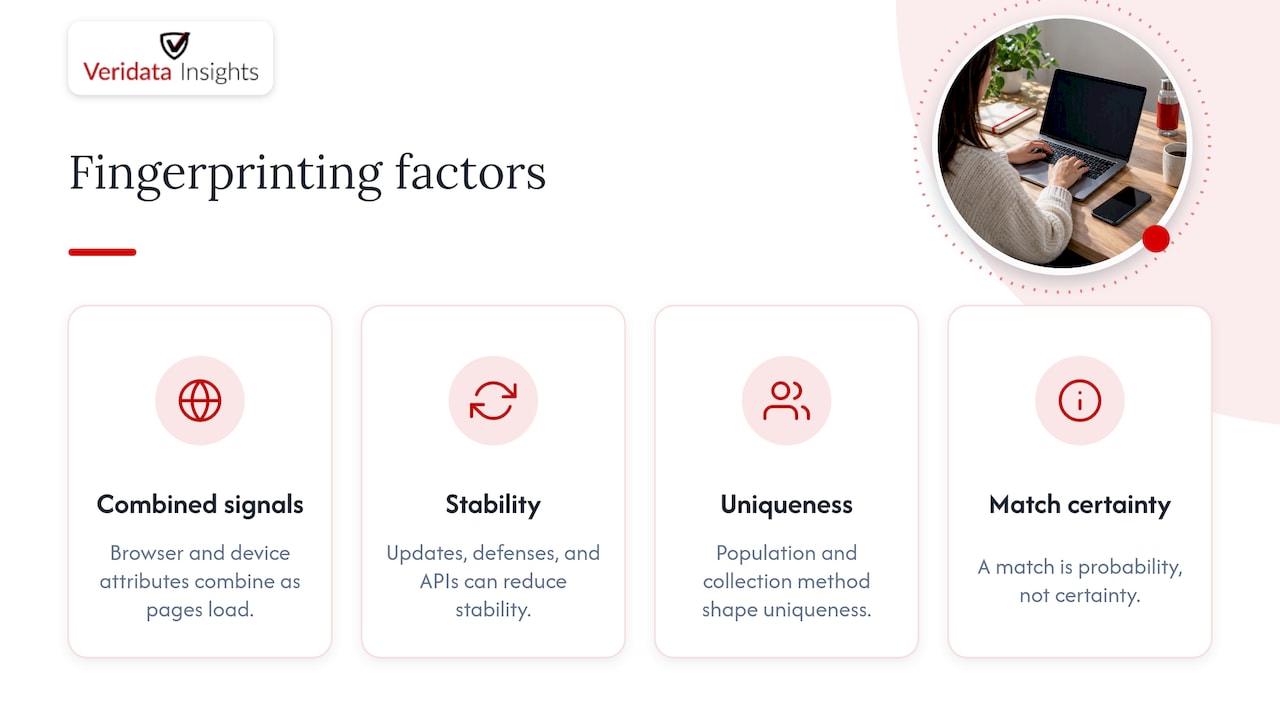
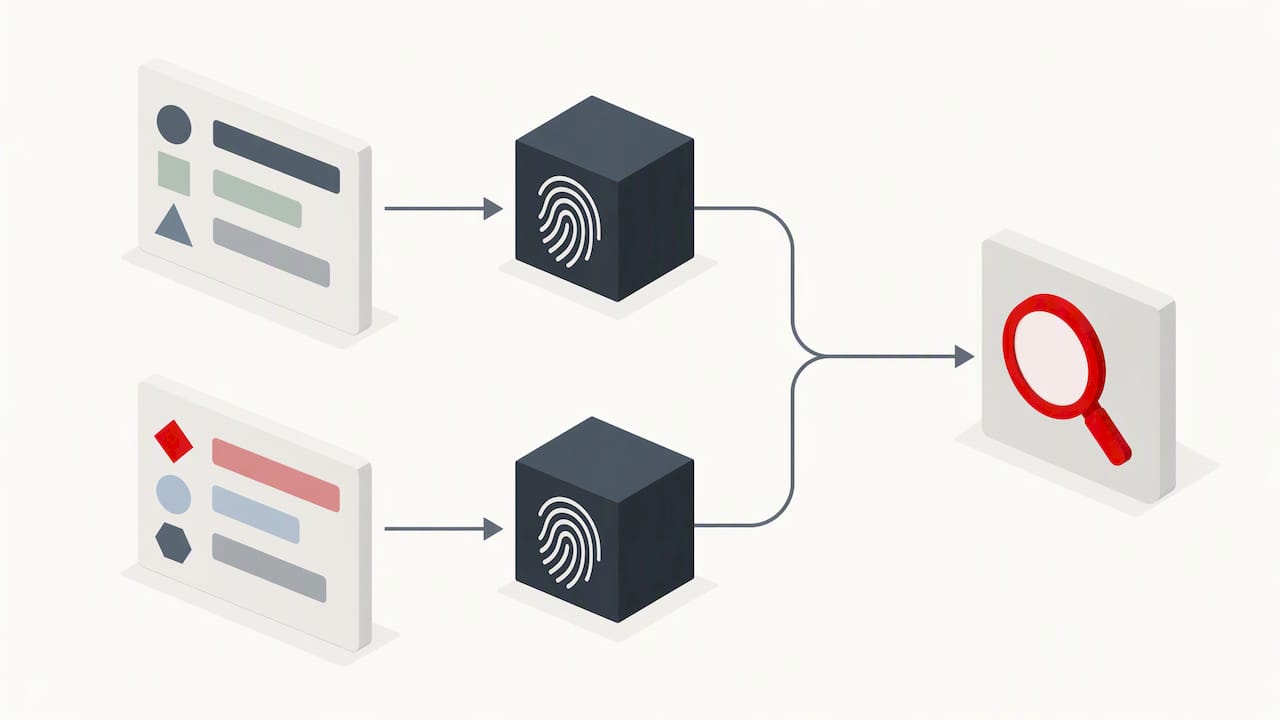
A fingerprint is built from a combination of attributes the respondent’s browser and device reveal as a page loads. None of them identifies a person alone. Together they can make a device stand out. Fingerprinting may use various browser and device attributes, but the signals collected depend on the implementation.
The ACM browser fingerprinting survey explains that fingerprints depend on these combined attributes, and that browser updates, privacy defenses, and changing APIs can alter or reduce stability. Stronger anti-fingerprinting protections mean a less reliable identifier. A large-scale empirical analysis adds that population and collection method strongly shape how unique devices appear, and that deduplication needs extra steps such as IP hashing.
So a match is a probability, not a certainty. Fingerprinting performance can vary in mobile-heavy samples, so validate it on your own respondent mix. Score the risk, then decide what to do.
What privacy controls should you apply?
Fraud prevention is not identity surveillance, and your controls should reflect that. The NIST SP 800-63B privacy guidance calls for controls proportionate to processing risk, predictable notices, manageability (alteration, deletion, selective disclosure), limited retention, and documented human-review rules for duplicate flags. In survey operations, that translates into this checklist:
- Tell participants in plain language that device signals are checked to protect data quality.
- Collect only the attributes needed for that stated purpose.
- Restrict secondary uses, so fingerprints never feed marketing or profiling.
- Restrict retention of fingerprint data and delete it according to your documented retention policy.
- Document who reviews duplicate flags and how a respondent can appeal one.
- Document how fingerprint data is accessed and governed.
Pro Tip: Write the participant notice and your internal SOP together, so what you promise respondents is exactly what your team does.
Balance matters here. Respondents expect honest disclosure and a fair process, and a flag that quietly cancels an incentive with no recourse invites complaints. A clear appeal path protects both your reputation and the genuine respondent on a shared household tablet.
How does fingerprinting fit into a layered fraud workflow?
The Triple C project found that single fraud checks are insufficient. Bots and human bad actors leave different signatures, and many fraud cases trip several indicators at once. Fingerprinting should sit beside these other signals:
- Completion timing and module-level response patterns
- Attention and consistency checks
- IP heuristics and network flags
- Panel IDs and email or identifier checks
- Open-end review for copied or nonsensical text
The Triple C study found that single checks are insufficient, so detection should combine multiple types of indicators, such as timing, IP, attention, and consistency checks.
Give each signal a weight, sum them into a risk score, and set tiers. A fingerprint match alone might trigger a flag. A match plus speeding plus a failed attention check might trigger quarantine. A simple triage runs flag, then human review, then quarantine or block. For thresholds, start conservative: set the auto-block line high enough that a lone fingerprint match never removes a respondent. Track flag rate, reviewer overturn rate, and the share of quarantined cases confirmed as fraud. For more on operational controls, see our guide on how researchers prevent fraudulent responses and our look at forensic markers and verification methods.
Can you dedupe without storing personal data?
Hashing may be one option to explore for comparing submissions without directly using names or email addresses. Its suitability depends on the attributes and safeguards used, and it should not be treated as proof of identity or anonymity.
Operational choices make or break it:
- Combine several attributes rather than one, so a single changed setting does not break the match.
- Use a salted, secure hash and keep the salt out of the analysis dataset.
- Consider how to link incentive eligibility to a completed response while limiting the personal data collected.
- Keep the hashing step separate from the response data.
There are limits: shared devices or changing attributes can affect duplicate matching. Consider these risks alongside CAPTCHA, behavior checks, and the layered scoring above. For readers building the anonymization step, this practitioner’s guide to data anonymization covers the techniques in more depth.
Pro Tip: Treat a hash collision as a flag for review, not as proof of a duplicate.
How do you validate and monitor performance?
Performance depends on who your respondents are, so test on your own mix. The ACM survey advises validating detection on your actual respondent mix, especially mobile-heavy samples, because performance changes as available attributes and privacy defenses change. Our approach:
- Hold out respondents you know are unique and count how many get falsely matched.
- Inject simulated duplicates from varied devices and count how many slips through.
- Report false-match and false-nonmatch rates, and the point where they cross, the equal error rate.
- Split every result by mobile and desktop.
- Revalidate on a schedule and after major browser releases.
- Keep logs and audit trails of every flag and decision.
Population and collection method strongly affect apparent uniqueness, so a threshold tuned on one sample can fail on another. Watch for drift: if your flag rate jumps after a browser update, that is a signal to retest, not to celebrate catching more fraud. See our piece on deduping survey data for forensic checks you can pair with these tests.
What should you ask suppliers and sample providers?
ESOMAR’s buyer questions give you a ready framework. Ask suppliers to explain:
- Which signal types they use and the decision thresholds behind flags
- How they handle false positives and respondent appeals
- Confirmation-of-identity at survey entry, not only at panel recruitment
- Cross-source duplicate controls and how source consistency is managed
- How they invite, track, quarantine, and block participants
- Retention policy and the reporting fields you receive
- Whether duplicate evidence is available at respondent, source, and project levels
- How profiled information is compared with in-survey answers
Vague answers are an answer. A supplier who cannot show thresholds or false-positive handling probably has not tested them.
How does Veridata Insights help you pilot and validate?
Size isn’t everything. Quality matters, and quality comes from controls you can verify. At Veridata Insights, we program surveys and consult on methodology. Bring us your respondent mix and we will consult with you on your research methodology. See how we handle respondent verification, explore our survey programming and consultation capabilities, or request a pilot or consultation today.
FAQ
Is digital fingerprinting enough to catch duplicate respondents?
No. Fingerprints are probabilistic, and browser updates and privacy defenses can change them. Use fingerprinting as one signal alongside timing, attention checks, and identifier checks.
Does fingerprinting work well on mobile devices?
It is less reliable there. Many phones share similar attributes, so false matches rise. Validate on your own mobile and desktop mix before setting thresholds.
Do I need to tell respondents about fingerprinting?
Yes, as good practice. NIST privacy guidance recommends predictable notices, limited retention, and documented review rules. State the purpose plainly and keep data only as long as needed.
Can I detect duplicates without storing personal data?
Hashing may help compare submissions without directly using names or email addresses, depending on how it is implemented. Pair any such method with other checks, since shared devices can complicate matching.
What should I ask a sample supplier about duplicates?
Ask about signal types, decision thresholds, false-positive handling, and identity confirmation at survey entry. Also ask what reporting fields you will receive.
Sources
- Browser Fingerprinting: A Survey
- Privacy Considerations
- Questions to help buyers of online samples.
- Managing and Minimizing Online Survey Questionnaire Fraud: Lessons from the Triple C Project – PMC