

If your study is longitudinal or handles protected health information, an institution-hosted research data-capture system like REDCap is the stronger fit. If you need polished, ad-hoc market or customer surveys deployed fast, an enterprise SaaS platform like Qualtrics wins. Two axes decide it: the hosting and licensing model, and the clinical feature set. The sections below cover features, security, cost, and how to choose.
TL;DR:
- REDCap supports longitudinal protocols, randomization, one click deidentification on export, clinical data entry, and file attachments; Qualtrics lacks several built in research features.
- Before collecting protected health information, confirm who hosts the system, validates it for your requirements, manages backups, and retains audit logs.
- REDCap is typically free for eligible consortium institutions, though local service fees may apply; Qualtrics enterprise contracts can reach tens of thousands annually.
- Consider outsourcing when your design is complex and longitudinal, IT support is limited, you are coordinating multiple sites, or you need respondents you cannot recruit yourself.
Table of Contents
- What REDCap and Qualtrics were built to do
- Where the features diverge for researchers
- Security, compliance, and who owns the validation
- What each platform really costs
- How to choose: three paths and the questions that decide
- How we help when the platform is only half the problem
- FAQ
- Sources
What REDCap and Qualtrics were built to do
The two tools solve different problems, and that origin story explains most of what follows.
- REDCap is a research data-capture platform. Access usually comes through institutional membership in the REDCap Consortium, so your local IT office manages hosting, compliance, and user support. Check with them before you plan a project.
- Qualtrics is an experience management platform. It is vendor-hosted under a commercial contract, and its strengths are polished survey design, rapid deployment, and enterprise administration.
- Governance differs. The consortium describes a collaborative, non-profit community model in which member institutions get full access to the codebase, which enables local control and customization. Qualtrics is a commercial platform, while REDCap’s member institutions can customize the software locally.
- Provisioning differs. One arrives through a membership your institution already holds. The other arrives through a procurement process and a signed agreement.
Michigan State’s CTSI comparison guide frames it the same way: Qualtrics suits market research, ad-hoc surveys, and customer feedback, while REDCap targets clinical and translational research, longitudinal studies, and regulated data management.
Where the features diverge for researchers
Start with study design. The same guide notes that Qualtrics lacks built-in randomization, longitudinal protocol definitions, and de-identified data exports, all of which are standard in REDCap. If your protocol has arms, events, or repeated visits, that gap shapes everything downstream.
- Longitudinal design: REDCap supports longitudinal protocol definitions. Qualtrics lacks this built-in feature, so check whether it fits your study’s follow-up requirements.
- De-identification and access control: REDCap supports one-click de-identification on export, a feature the comparison guide identifies as critical for studies handling protected health information.
- Instrument types: REDCap handles non-survey data entry and file attachments, which suits clinical forms. Qualtrics is suited to polished survey design.
- Exports and APIs: Check how each platform pushes data to your statistical software and which APIs your institution has enabled. Local configuration varies.
- Offline collection: If field staff work without reliable connectivity, confirm offline support in your institution’s setup before you commit.
Practitioners tend to describe Qualtrics as excellent for aesthetics and speed but rigid for complex workflows. That matches what we see when teams bring us a study that outgrew a survey tool mid-field.
Pro Tip: Build a representative instrument in each tool before you decide. Include a skip-logic branch, a repeated visit, and an export to your stats package. Prototyping can help you spot problems before committing.
Security, compliance, and who owns the validation
With a consortium platform, hosting and compliance typically sit with your institution and its IT staff. That means HIPAA safeguards, backups, and audit logging follow your local policies, and your timeline depends on their queue. With an enterprise SaaS vendor, confirm who hosts the platform and whether its environment meets your compliance needs, including 21 CFR Part 11 if applicable.
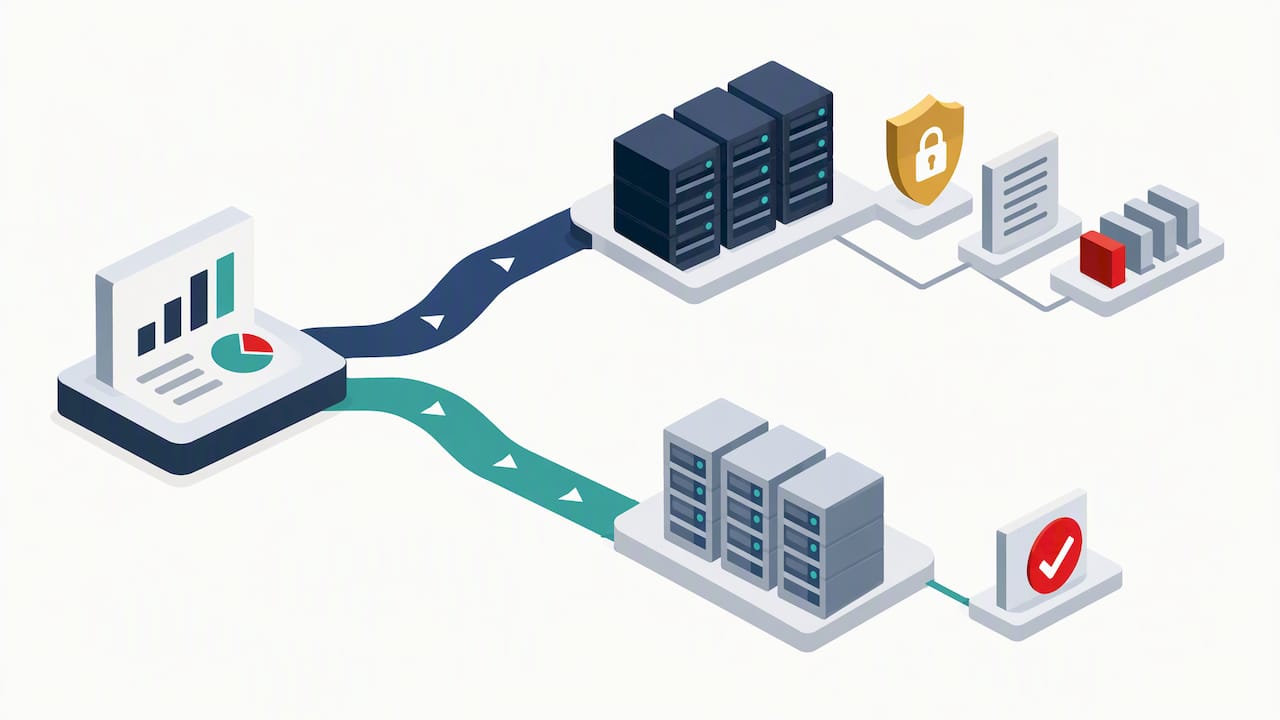
If you are weighing hosting responsibilities more broadly, this cloud infrastructure data compliance guide is a useful reference for the questions IT teams ask.
Confirm these with IT or the vendor before you build anything:
- Where is the platform hosted, and who administers it?
- Is the environment validated for your regulatory needs, including 21 CFR Part 11 if applicable?
- Which access controls and role permissions can you configure per project?
- How are backups handled, and how long are audit logs retained?
- Who signs off on your protocol’s data security plan?
What each platform really costs
The cost shapes differ more than the headline numbers suggest. According to the same CTSI guide, Qualtrics is sold under commercial enterprise contracts with variable pricing that can reach tens of thousands of dollars annually. REDCap is typically provided at no cost to non-profit, academic, and research institutions that join the consortium, though some institutions charge nominal local fees for specific services.
License fees are only one line in the budget. Plan for these as well:
- Institutional hosting and IT support time
- Validated hosting or premium compliance modules
- Programming and testing hours for complex instruments
- Respondent recruitment or access to panels, which neither platform includes by default
For real numbers, ask your procurement office for Qualtrics quotes, and ask your institutional REDCap administrator what local fees and services apply.
How to choose: three paths and the questions that decide
Most teams land on one of three paths: use your institution’s research data-capture system, buy vendor SaaS, or bring in a full-service research partner who programs and fields the study for you.
Run these questions past IT, procurement, or the vendor:
- Is the platform available to you now, and how long does project approval take?
- What export and de-identification options exist for your data?
- Is it validated or Part 11-ready for your protocol?
- What are the support terms and service levels when fieldwork is live?
- What is the full pricing structure, including add-ons?
Outsourcing becomes the efficient choice when your design is complex and longitudinal, your IT resources are thin, you are coordinating multiple sites, or you need respondents you cannot recruit yourself.
Pro Tip: Get the answers to those five questions in writing before you finalize your budget. Verbal assurances from a busy IT office rarely survive a protocol amendment.
How we help when the platform is only half the problem
Choosing a platform is the easy part. Programming it correctly, recruiting the right respondents, and delivering clean data on schedule is where studies stall. At Veridata Insights, we offer flexible, full-service support. Our team handles survey programming and consultation, respondent recruitment, translations and localizations, data processing and visualization, and study design consultation. When your protocol is complex, spans multiple sites, or needs hard-to-reach audiences, we can reduce your risk and speed execution, including guidance on hosting questions to raise with your IT office. See how our full-service market research works, then request a project consultation or proposal and tell us what your study needs.
FAQ
Is REDCap free or paid?
REDCap is typically provided at no cost to non-profit, academic, and research institutions that join the consortium. Some institutions charge nominal local fees for specific services, so ask your REDCap administrator what applies to you.
Is REDCap difficult to use?
Basic instruments are straightforward to build, but longitudinal designs, branching logic, and de-identified exports take planning. Your institution’s REDCap team can usually advise, and we can program the more complex builds for you.
Who are the main competitors of Qualtrics?
Qualtrics competes with other enterprise survey and experience management platforms, plus research-focused data-capture tools such as REDCap. The right comparison depends on whether your study is a market survey or a regulated clinical project.
Is Qualtrics better than REDCap for research?
Neither wins outright. Qualtrics fits polished, rapid-deployment surveys, while REDCap fits longitudinal studies and PHI-sensitive data capture. Match the tool to your study design and compliance needs.