



Qualitative data analysis remains one of the most challenging yet critical tasks for market researchers and business consultants in 2026. Without structured methods, you risk drowning in transcripts, interviews, and observations that yield little actionable insight. Qualitative data consists of unstructured or semi-structured textual, visual, or audio information that requires thematic interpretation rather than statistical analysis. This guide delivers advanced, practical techniques to transform raw qualitative data into reliable business intelligence that drives strategic decisions.
Table of Contents
- Understanding Qualitative Data Analysis And Its Challenges
- Preparing Your Qualitative Data For Analysis: Essential Tools And Frameworks
- Step-By-Step Guide To Analyzing Qualitative Data Effectively
- Verifying And Applying Qualitative Analysis Results To Business Insights
- Boost Your Qualitative Research With Expert Support
- Frequently Asked Questions About Analyzing Qualitative Data
Key takeaways
| Point | Details |
|---|---|
| Qualitative analysis complexity | Researchers face challenges with data volume, subjective bias, and ensuring valid interpretation during analysis. |
| Preparation is foundational | Organizing data with specialized software and frameworks improves efficiency and accuracy significantly. |
| Multiple methods available | Thematic, content, and narrative analysis each offer unique strengths for different research objectives. |
| Verification builds trust | Triangulation, peer debriefing, and member checking enhance credibility of qualitative findings. |
| Integration drives value | Translating qualitative insights into actionable business guidance maximizes research impact. |
Understanding qualitative data analysis and its challenges
Qualitative data analysis transforms non-numerical information into meaningful patterns and insights. In 2026 research environments, this includes interview transcripts, focus group recordings, open-ended survey responses, social media content, observational notes, and visual materials. Unlike quantitative data with clear numerical values, qualitative data requires interpretive skills to identify themes, patterns, and underlying meanings.
The complexity stems from multiple data formats and sources. You might analyze audio recordings requiring transcription, video content demanding visual coding, and textual documents needing thematic categorization. Each format presents unique analytical challenges and requires different preparation approaches.
Researchers often struggle with data volume, subjective bias, and ensuring valid interpretation during qualitative analysis. Common challenges include:
- Managing overwhelming amounts of unstructured data across multiple sources and formats
- Maintaining objectivity when personal perspectives influence theme identification and coding
- Ensuring consistency across multiple analysts working on the same dataset
- Balancing depth of analysis with project timelines and resource constraints
- Documenting analytical decisions to create transparent, reproducible research processes
These challenges compound when working with diverse participant populations or sensitive topics. Understanding the benefits of combining qualitative and quantitative research helps contextualize where qualitative methods add unique value. The interpretive nature of qualitative analysis means two skilled researchers might identify different themes from identical data, making systematic approaches essential for credibility.
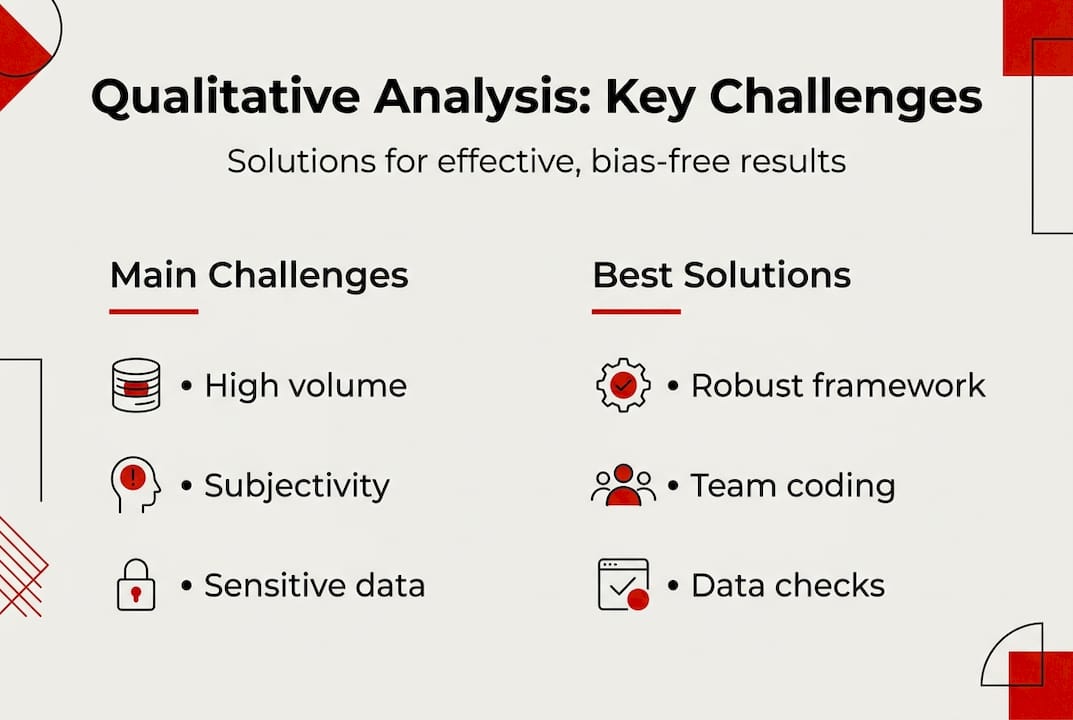
Addressing these challenges requires robust methodological frameworks and verification processes. The following sections provide concrete tools and techniques to overcome common pitfalls and deliver trustworthy qualitative insights.
Preparing your qualitative data for analysis: essential tools and frameworks
Effective preparation sets the foundation for rigorous qualitative analysis. Before diving into coding and theme development, you need organized data, appropriate tools, and clear analytical frameworks.
Organizing qualitative data with specialized software improves analysis efficiency and accuracy. Top qualitative data analysis software in 2026 includes:
- NVivo for comprehensive coding, thematic analysis, and mixed methods integration
- MAXQDA for visual data analysis, team collaboration, and literature review synthesis
- Atlas.ti for grounded theory approaches and network visualization of concept relationships
- Dedoose for cloud-based collaboration and quantitative data integration
- Quirkos for intuitive visual coding suited to smaller projects and quick turnarounds
Each platform offers distinct advantages. NVivo excels at handling large datasets with complex coding schemes. MAXQDA provides superior visualization tools for presenting findings. Atlas.ti supports theory-building through network diagrams. Your choice depends on project scope, team size, and analytical approach.

| Framework | Purpose | Best For |
|---|---|---|
| Coding schemes | Systematic categorization of data segments | Identifying patterns across large datasets |
| Thematic frameworks | Organizing data by predetermined or emergent themes | Policy research and applied consulting projects |
| Matrix analyses | Cross-case comparison using structured grids | Multi-site studies and comparative research |
| Narrative structures | Analyzing story elements and sequence | Understanding participant experiences and journeys |
Beyond software, establish clear frameworks before analysis begins. Develop initial coding schemes based on research questions, though remain open to emergent codes. Create thematic frameworks that organize how you will approach pattern identification. Design matrix templates for systematic cross-case comparison.
Data preparation best practices include ensuring transcription accuracy through quality checks, anonymizing participant information to protect confidentiality, standardizing file naming conventions for easy retrieval, and creating backup systems to prevent data loss. Clean, well-organized data saves hours during analysis and reduces errors.
Pro Tip: Maintain a detailed codebook documenting each code’s definition, inclusion criteria, and example quotes to ensure consistency across analysts and facilitate team collaboration on complex projects.
When choosing a qualitative research firm, assess their preparation processes and technological capabilities. Firms with robust data management systems deliver more reliable results.
Step-by-step guide to analyzing qualitative data effectively
Executing qualitative analysis requires systematic procedures that balance rigor with interpretive flexibility. Follow these steps to transform prepared data into meaningful insights.
- Familiarize yourself with the entire dataset through initial reading or listening without coding.
- Develop preliminary codes based on research questions and theoretical frameworks.
- Apply codes systematically to data segments, remaining open to emergent patterns.
- Review coded segments to refine code definitions and merge redundant categories.
- Identify broader themes by grouping related codes into meaningful patterns.
- Examine relationships between themes to build coherent analytical narratives.
- Select representative quotes that illustrate each theme with participant voices.
- Interpret findings in context of research objectives and existing literature.
Thematic and content analysis remain foundational approaches, with evolving best practices in 2026 integrating software-aided coding and verification steps. Each method serves distinct purposes:
| Method | Strengths | Ideal Applications |
|---|---|---|
| Thematic analysis | Flexible, accessible, identifies patterns across dataset | Exploratory research, understanding diverse perspectives |
| Content analysis | Systematic, quantifiable, reliable across coders | Media analysis, comparing frequency of concepts |
| Narrative analysis | Captures story structure, temporal sequences, meaning-making | Understanding customer journeys, change processes |
| Grounded theory | Builds theory from data, rigorous constant comparison | Developing new frameworks, unexplored phenomena |
| Discourse analysis | Examines language use, power dynamics, social construction | Brand positioning, organizational communication |
Iterative coding strengthens analysis quality. First-cycle coding applies descriptive labels to data segments. Second-cycle coding groups initial codes into pattern codes or themes. This iterative process allows patterns to emerge organically rather than forcing data into predetermined categories.
Deriving meaningful patterns requires moving beyond surface-level description. Ask what themes reveal about underlying beliefs, motivations, or processes. Consider how patterns connect to broader business or social contexts. Examine contradictions and outliers that challenge initial interpretations.
Pro Tip: Use multiple independent coders for cross-validation to reduce individual bias and strengthen finding credibility, particularly for high-stakes consulting projects where recommendations carry significant business implications.
Understanding how data and analytics are transforming strategic consulting helps position qualitative insights within broader analytical ecosystems. The demand generation research phase demonstrates how qualitative analysis informs strategic marketing decisions.
Verifying and applying qualitative analysis results to business insights
Rigorous verification separates credible qualitative research from subjective interpretation. Multiple techniques strengthen trustworthiness and enhance confidence in findings.
Verification techniques that enhance research credibility include:
- Triangulation using multiple data sources, methods, or analysts to confirm findings
- Member checking by sharing interpretations with participants for validation
- Peer debriefing through discussions with colleagues who challenge assumptions
- Audit trails documenting analytical decisions and coding evolution
- Negative case analysis actively seeking data that contradicts emerging themes
- Prolonged engagement ensuring sufficient time to understand context deeply
Verification techniques such as triangulation, peer debriefing, and member checking enhance the credibility of qualitative research findings. These methods address the interpretive nature of qualitative work by introducing systematic checks against researcher bias.
Common pitfalls threaten analysis validity. Confirmation bias leads researchers to emphasize data supporting preexisting beliefs while ignoring contradictory evidence. Avoid this by actively searching for disconfirming cases. Premature closure occurs when analysts stop exploring data once initial themes emerge. Combat this by setting minimum coding passes before finalizing themes. Insufficient contextualization happens when findings ignore participant backgrounds or situational factors. Address this by documenting context throughout analysis.
Rigorous verification processes transform subjective interpretation into trustworthy insights that business leaders can confidently use for strategic decision-making, separating professional qualitative research from casual observation.
Translating qualitative insights into actionable business guidance requires connecting themes to strategic implications. Move beyond describing what participants said to explaining what findings mean for business decisions. Identify specific recommendations supported by thematic evidence. Quantify qualitative patterns when possible, noting how many participants expressed particular views.
For consulting applications, frame insights in terms of client objectives. If themes reveal customer pain points, translate these into product development priorities. When patterns expose operational inefficiencies, connect findings to process improvement opportunities. Link qualitative evidence to financial or performance metrics when feasible.
The power of qualitative research services lies in this translation from participant voices to strategic intelligence. Professional researchers excel at bridging analytical rigor with business relevance.
Boost your qualitative research with expert support
Complex qualitative projects benefit significantly from professional research expertise. When stakes are high and insights must withstand scrutiny, partnering with experienced qualitative researchers enhances both efficiency and credibility. Expert teams bring specialized methodological knowledge, advanced analytical tools, and objective perspectives that internal teams may lack.
Professional qualitative research services save substantial time during data collection, transcription, coding, and analysis phases. Experienced researchers identify themes faster and more reliably through pattern recognition developed across hundreds of projects. They navigate common pitfalls that derail internal efforts, from recruitment challenges to analytical dead ends.
Veridata Insights offers comprehensive qualitative research support tailored to your specific consulting or business intelligence needs. Our team handles everything from study design and participant recruitment through data collection, analysis, and strategic reporting. We work flexibly, providing as much or as little support as your project requires.
Pro Tip: Early collaboration with qualitative research experts during study design leads to superior data quality and more actionable insights than engaging specialists only after data collection concludes.
Contact our qualitative research experts to discuss how we can strengthen your next project with rigorous methodology and deep analytical expertise.
Frequently asked questions about analyzing qualitative data
What is the best software for qualitative data analysis in 2026?
NVivo leads for large, complex projects requiring sophisticated coding and team collaboration. MAXQDA excels when visual data analysis and presentation matter most. For cloud-based collaboration and budget-conscious teams, Dedoose offers excellent value. Your best choice depends on project scope, data types, and team size.
How can I reduce bias in qualitative research?
Use multiple coders to cross-validate theme identification and coding decisions. Actively search for negative cases that contradict emerging patterns. Document analytical decisions in audit trails to maintain transparency. Engage in peer debriefing where colleagues challenge your interpretations. Member checking with participants validates that your analysis accurately represents their perspectives.
Which qualitative method suits business consulting projects?
Thematic analysis works well for most consulting applications due to its flexibility and accessibility to stakeholders. Content analysis suits projects requiring systematic comparison across cases or time periods. Narrative analysis excels for understanding customer journeys or organizational change processes. Choose based on research questions and the type of insights clients need.
How long does effective qualitative analysis typically take?
Plan approximately one hour of analysis time per hour of interview data for experienced researchers. A 10-interview study with hour-long sessions requires 40 to 60 hours for transcription, coding, theme development, and reporting. Complex projects with multiple data sources or large teams need additional time for coordination and verification. Rushing analysis compromises quality and credibility.
Can qualitative and quantitative data be combined effectively?
Absolutely. Mixed methods research leverages qualitative depth with quantitative breadth for comprehensive insights. Use qualitative findings to explain quantitative patterns or develop survey instruments. Employ quantitative data to identify which qualitative themes warrant deeper exploration. The best market research agencies for qualitative research integrate both approaches seamlessly to deliver robust, actionable intelligence.
Recommended
- Qualitative vs. Quantitative: Why You Need Both – Veridata Insights
- Data analysis step by step for market researchers in 2026 – Veridata Insights
- Video: For All Your Qualitative & Quantitative Research Needs – Veridata Insights
- Partnering with Veridata Insights’ Qualitative Research Division – Veridata Insights