

TL;DR:
- Consumer data includes detailed information about individual behaviors, preferences, and interactions used to guide strategic decisions. Companies that properly integrate and analyze this data gain deeper insights, improve personalization, and outperform competitors who neglect its importance.
Consumer data is defined as the collection of detailed information about individual behaviors, preferences, and interactions that organizations use to drive strategic decisions. It is the foundation of modern market research, customer insights analysis, and competitive strategy. 80% of consumers prefer brands that offer personalized experiences. That single statistic explains why businesses that treat consumer data as a core asset consistently outperform those that treat it as an afterthought. Veridata Insights works with organizations across B2B, B2C, and healthcare market research sectors to turn raw behavioral signals into decisions that actually hold up.
What types of consumer data do companies collect?
Consumer data falls into four primary categories: demographic, behavioral, transactional, and attitudinal. Each type answers a different question about who your customer is, what they do, what they buy, and what they think.
Demographic data covers age, income, location, and household composition. It tells you who is in the room. Behavioral data tracks clicks, page visits, app usage, and content engagement. It tells you what people actually do, not what they say they do. Transactional data records purchase history, order frequency, and average spend. Attitudinal data comes from surveys, reviews, and focus groups, capturing stated opinions and preferences.
The distinction between claimed data and observed data matters enormously. Observed behavioral data from digital footprints reduces the recall bias that plagues self-reported survey responses. A customer might say they buy based on quality, but their transaction log tells a different story about price sensitivity.
Collection methods include:
- Website cookies and tracking pixels that capture browsing behavior in real time
- Loyalty programs that link purchase history to individual profiles
- Third-party data partnerships that append demographic and psychographic attributes to first-party records
- Online surveys and panels that collect stated preferences directly from respondents
- Social listening tools that monitor brand mentions, sentiment, and trending topics
Pro Tip: First-party data collected directly from your own customers is the most reliable and privacy-compliant source you have. Build your strategy around it before layering in third-party data.
How do you maintain data quality and integrate diverse sources?
Data quality is the single biggest obstacle between a company and useful consumer insights. Poor data quality and fragmented datasets cause wasted marketing spend and create compliance risks. The problem is not a shortage of data. It is that most organizations hold data in disconnected silos that tell incomplete or contradictory stories.

The fix is integration. Combining social media sentiment, transaction logs, and search behavior into a unified consumer profile reduces bias and surfaces patterns that no single source reveals on its own. A customer who searches for a product category, reads three reviews, and then abandons a cart is sending a clear signal. Seeing that full sequence requires connected data.
| Data source | Typical strength | Common pitfall |
|---|---|---|
| First-party CRM data | High accuracy, directly owned | Often incomplete or outdated |
| Social media sentiment | Real-time emotional signals | Noisy, hard to attribute |
| Transaction logs | Behavioral truth, not stated intent | No context for why decisions were made |
| Survey responses | Rich attitudinal detail | Recall bias, social desirability effects |
| Third-party data | Broad demographic coverage | Variable quality, privacy compliance risk |
Volume alone does not solve the quality problem. A smaller, well-integrated dataset consistently outperforms a massive fragmented one. Prioritize accuracy, recency, and source diversity over sheer quantity.
Pro Tip: Run a data audit before launching any new research initiative. Identify which sources are current, which are stale, and where the gaps are. You will save significant time and budget downstream.
What advanced analytics methods improve consumer insights?
Advanced analytics transforms raw behavioral records into interpretable signals. The most significant shift in recent years is the move from manual coding and cross-tabulation to AI-driven methods that process far larger datasets in a fraction of the time.
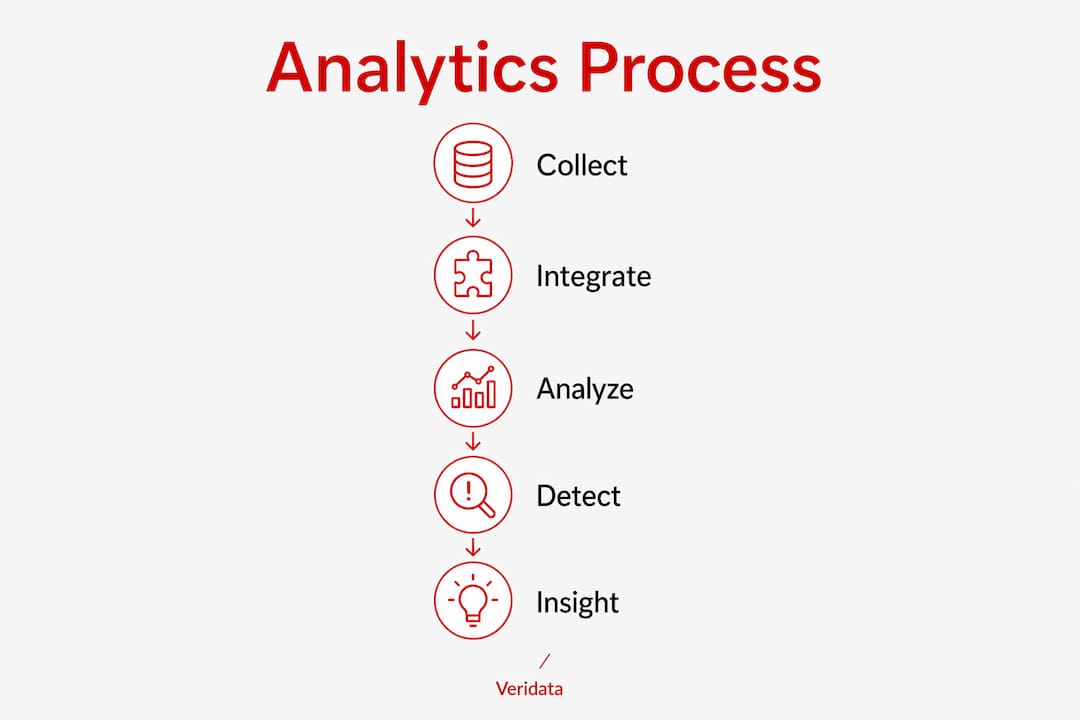
AI-driven sentiment and behavioral clustering achieves accuracy above 80% and reduces analysis turnaround from weeks to hours. That speed matters when market conditions shift quickly and decisions cannot wait for a six-week research cycle.
Key methods that deliver measurable improvements include:
- Sentiment analysis that classifies open-ended responses, reviews, and social posts by emotional tone and topic
- Behavioral clustering that groups customers by actual usage patterns rather than assumed demographic segments
- Predictive modeling that uses historical purchase and engagement data to forecast future behavior
- Natural language processing (NLP) that extracts themes and intent from unstructured text at scale
- Journey mapping analytics that trace the full path from awareness to purchase across multiple touchpoints
Big data integration with AI enables real-time detection of behavioral pattern shifts that traditional methods miss entirely. AI classifies user profiles for sentiment recognition, acting as a live proxy for consumer psychology. That capability moves market research from a periodic exercise to a continuous feedback loop.
AI-powered sentiment analysis is particularly valuable for organizations that collect large volumes of qualitative feedback and need to act on it quickly. The goal is not to replace human interpretation. It is to surface the signals that human analysts should focus on.
What are the key privacy practices for consumer data?
Privacy is not a compliance checkbox. Privacy failures erode customer trust and expose consumers to identity theft, which directly damages brand loyalty and long-term revenue. Organizations that treat privacy as a foundational practice build stronger relationships than those that treat it as a legal obligation.
The regulatory environment reinforces this. The General Data Protection Regulation (GDPR) in Europe, the California Consumer Privacy Act (CCPA) in the United States, and a growing number of state-level laws set clear requirements for data collection, storage, and consumer rights. Non-compliance carries financial penalties and reputational damage that far exceed the cost of doing it right from the start.
Best practices for ethical data use:
- Publish a clear, plain-language privacy policy that explains what data you collect, why you collect it, and how long you retain it.
- Implement opt-in and opt-out controls that give consumers genuine choice over how their data is used.
- Apply data minimization principles by collecting only what you need for a specific, stated purpose.
- Secure data storage with encryption, access controls, and regular vulnerability assessments.
- Conduct regular data audits to identify and delete records that are outdated, inaccurate, or no longer needed.
Personal data security sits at the intersection of privacy and safety, not just regulatory compliance. Veridata Insights addresses this directly through its data security practices in every research engagement.
How do evolving consumer behavior patterns inform strategy?
Consumer behavior is shifting in ways that require a rethink of standard marketing assumptions. Average order values grew 1.9% while shopping trip frequency fell 1.6% over a two-year period. Consumers are buying less often but spending more per trip. That signals more deliberate, considered purchasing rather than impulsive buying.
Consumer demand persists even when conversion rates fall. Longer buyer journeys mean that a prospect who does not convert today is still in the market. Brands that stay visible and relevant across multiple touchpoints capture that demand when the timing is right.
| Behavior shift | What the data shows | Strategic implication |
|---|---|---|
| Fewer, larger purchases | Order value up 1.9%, frequency down 1.6% | Invest in consideration-stage content |
| Longer purchase journeys | More touchpoints before conversion | Build multi-channel nurture sequences |
| Demand persistence | Intent survives even without immediate purchase | Retargeting and follow-up sequences matter |
| Preference for personalization | 80% prefer personalized brand experiences | Segment and tailor at the individual level |
Understanding shifting consumer preferences requires continuous data collection, not just annual surveys. The organizations that respond fastest to behavioral shifts are the ones with live data pipelines, not static reports.
Key Takeaways
Quality, integrated consumer data consistently outperforms large, fragmented datasets when it comes to generating reliable insights and supporting sound business decisions.
| Point | Details |
|---|---|
| Observed data beats claimed data | Digital footprints and transaction logs reduce recall bias found in surveys. |
| Integration beats volume | Combining CRM, social, and behavioral data builds richer, more accurate profiles. |
| AI accelerates insight | Sentiment and clustering models cut analysis time from weeks to hours at 80%+ accuracy. |
| Privacy builds trust | Transparent policies and data minimization protect customers and brand reputation. |
| Behavior is shifting | Consumers buy less often but spend more per trip, requiring multi-touchpoint strategies. |
Why data quality matters more than data quantity
I have worked with research teams that were drowning in data but starving for insight. The instinct is always to collect more. More sources, more variables, more respondents. But the organizations that actually make better decisions are the ones that got disciplined about what they collect and why.
The fragmentation problem is real. A brand might have a CRM with three years of purchase history, a social listening feed, a survey panel, and a web analytics platform, all running in parallel and never talking to each other. Each source tells a partial story. None of them tells the full one. The AI insight about identifying emotional and intentional signals across fragmented sources is genuinely useful, but only if the underlying data is clean and connected enough for the model to work with.
Privacy is the other piece that gets underestimated. I have seen brands lose years of customer goodwill in a single data incident. The regulatory penalties are real, but the trust damage is worse and harder to repair. Building privacy into your data practices from the start is not a burden. It is a competitive advantage with customers who are paying attention.
The honest truth is that most organizations do not need more data. They need better questions, cleaner sources, and the analytical capability to connect the dots. That is where the real competitive edge lives.
How Veridata Insights supports your consumer research strategy
Veridata Insights specializes in turning complex consumer data challenges into clear, usable research. Whether you need to design a quantitative study, integrate behavioral and attitudinal data sources, or apply advanced analytics to a hard-to-reach audience, our consultancy is available seven days a week with no project minimums. From questionnaire design and data collection to processing, coding, and data visualization, every engagement is built around your specific research objective. If you are ready to move from fragmented data to real consumer intelligence, reach out to Veridata Insights and let’s talk about what your research needs.
FAQ
What is consumer data?
Consumer data is information collected about individual behaviors, preferences, purchases, and interactions. Organizations use it to understand customer needs and make informed business and marketing decisions.
What is the difference between first-party and third-party consumer data?
First-party data is collected directly from your own customers through purchases, surveys, or website interactions. Third-party data is purchased from external providers and carries higher privacy compliance risk and variable accuracy.
How does data privacy regulation affect consumer data collection?
Regulations like GDPR and CCPA require organizations to disclose what data they collect, obtain consent, and honor consumer rights to access or delete their records. Non-compliance carries financial penalties and reputational harm.
Why does consumer behavior data matter for marketing strategy?
Consumer behavior data reveals what customers actually do, not just what they say they will do. It supports more accurate segmentation, better timing of campaigns, and stronger personalization that drives higher spend.
How can AI improve customer insights analysis?
AI-driven sentiment analysis and behavioral clustering achieve accuracy above 80% and reduce analysis time from weeks to hours, allowing research teams to act on findings while they are still relevant.