


TL;DR:
- Choosing the right data collection method is essential to accurately monitor production, OEE, and quality trends.
- Hybrid approaches combining automation with manual input provide scalable, actionable insights and reduce organizational silos.
Choosing the wrong data collection method on the factory floor is not just a technical misstep. It can actively hide production losses, distort quality trends, and push your team toward decisions built on incomplete or inaccurate data. Manufacturing data collection methods each carry unique strengths and tradeoffs, and the gap between a well-matched approach and a poor one shows up fast in your OEE scores, uptime, and customer satisfaction. This guide walks you through the most effective methods available today, so you can match the right tools to your facility’s real operational needs.
Table of Contents
- Understanding key criteria for selecting data collection methods
- Manual data collection: Simplicity and limitations
- Automated data collection: Sensors, IoT, and machine integration
- Hybrid and connected data collection for smarter insights
- Advanced architectures: IoT, edge computing, and cloud analytics
- Benchmarking and measuring with industry standards
- A fresh perspective on choosing your manufacturing data collection mix
- Turn insights into action with Veridata Insights
- Frequently asked questions
Key Takeaways
| Point | Details |
|---|---|
| Define criteria first | Clarify your data needs, quality goals, and integration requirements before choosing a method. |
| Automate when possible | Automated data collection consistently delivers higher accuracy and real-time insights. |
| Hybrid outperforms solo methods | Combining automated and manual capture covers both volume and context for smarter decisions. |
| Connect quality and operations | Linking production and lab data enables rapid, root-cause analysis and proactive improvement. |
| Use benchmarks for context | Comparing your data against industry standards helps target critical improvement areas. |
Understanding key criteria for selecting data collection methods
Before you compare specific tools or systems, you need a clear framework. The wrong criteria lead to the wrong purchase, and that mistake gets expensive fast.
Here are the factors that matter most when evaluating any data collection approach for your facility:
- Volume and frequency: How much data do you need, and how often? A high-speed assembly line generating thousands of events per hour has very different requirements than a low-volume specialty batch operation.
- Accuracy and speed: Do you need real-time capture, or is batch reporting acceptable? Real-time data supports immediate corrective action. Batch data is easier to manage but slower to act on.
- Integration compatibility: Can the method connect with your existing Manufacturing Execution System (MES), ERP, or lab information systems? Isolated data silos are one of the most common reasons good data never becomes useful insight.
- Sampling strategy: Full data capture is not always feasible or even necessary. Strategic sampling by shift, line, or batch is essential for representative data without overwhelming your team.
- Decision impact: Does the method support your core continuous improvement goals? Think OEE, uptime, cycle time, and quality yield. If it does not feed those metrics directly, question whether it belongs in your stack.
Following data collection best practices helps you prioritize these criteria before any vendor conversation.
“The goal is not the most data. The goal is the right data, collected at the right frequency, in a form your team can actually act on.”
Pro Tip: Hybrid combinations of automated and manual collection frequently outperform any single method alone. Do not feel pressured to pick one and stick with it exclusively.
Understanding the data-collection decision benefits up front saves you from costly retrofits six months into a deployment.
Manual data collection: Simplicity and limitations
With criteria in mind, let’s explore the most basic and still widely used approach: manual data collection.
Manual methods remain common in facilities at every stage of digitization. Operators log machine states, record downtime reasons, note process results, and count throughput or defects by hand, either on paper forms or in spreadsheets. Manual methods include operator logging of machine readings, stops, process results, and manual throughput counting, and they show up in plants worldwide, from small job shops to large automotive suppliers.
The reasons for their staying power are real:
- Low upfront cost: Paper and spreadsheets require minimal capital investment.
- Flexibility: Operators can add contextual notes that automated systems miss entirely. Why did the line stop? A sensor cannot tell you it was because a new hire loaded the wrong material.
- Familiarity: Most shop floor teams already know how to use them. Training time is minimal.
But the drawbacks are serious, especially for executives tracking performance at scale.
- Manual logging is error-prone. Transcription mistakes, missed entries, and rounding occur regularly.
- Time lags are common. Data recorded at end-of-shift may be reconstructed from memory rather than real-time observation.
- Short events are almost always missed. Micro-stops, loss events under 30 seconds, are often missed by manual logging, but direct-sensor monitoring reliably captures them. These micro-stops can represent as much as 38% of total production losses in some facilities, yet they go completely unrecorded when humans are doing the logging.
That last point matters enormously for any executive trying to move the OEE needle. If your team cannot see micro-stop losses, they cannot eliminate them. And you cannot improve what you cannot measure.
Manufacturing survey data can supplement operator logs effectively when you need structured human input at scale without the burden of a full automated system rollout.
Manual methods work best in low-volume environments, for capturing contextual information automated systems cannot interpret, and during early-stage improvement projects where you are still learning which data points matter.
Automated data collection: Sensors, IoT, and machine integration
Manual techniques have their place, but many manufacturers now advance to automated solutions for richer insight.
Automated data collection captures information directly from machines, sensors, and control systems without depending on human action. The range of technologies available today is broad:
- Proximity and photoelectric sensors: These sensors count production items and scrap in real time, feeding accurate throughput and yield figures directly to your data system.
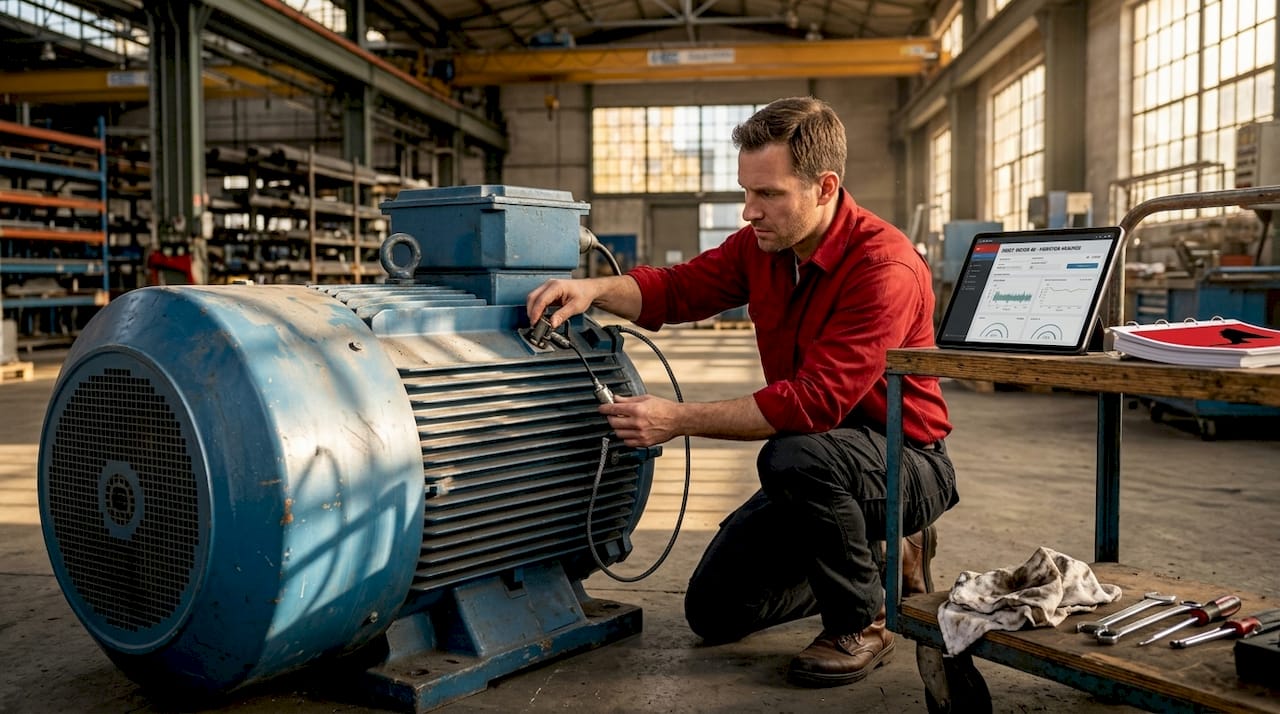
- Vibration and temperature sensors: Monitor machine health continuously, flagging early signs of mechanical wear before failure occurs.
- Direct machine interfaces: Connect via OPC-UA or similar protocols to pull cycle time, speed, and fault codes straight from CNC machines, PLCs, or robotics.
- IoT devices: Wireless edge devices collect and transmit data from equipment that lacks native connectivity, retrofitting older machinery into your digital infrastructure.
- Vision systems and video analytics: Capture product quality data automatically during inspection, reducing subjective human judgment in pass/fail decisions.
Automated capture via sensors and MES enables near real-time data capture with reduced error, which means your performance dashboards reflect what is actually happening on the floor right now, not what someone remembered to write down an hour ago.
| Sensor type | What it captures | Primary use case |
|---|---|---|
| Photoelectric sensor | Item counts, scrap rates | Throughput, OEE availability |
| Vibration sensor | Machine oscillation patterns | Predictive maintenance |
| Temperature sensor | Heat levels in components | Equipment health, energy use |
| Current transducer | Energy consumption per machine | Energy efficiency tracking |
| Vision / camera system | Surface defects, dimensions | Automated quality inspection |
Pro Tip: Automated sensor data is a natural feed for predictive analytics. When you trend vibration or temperature readings over time, your maintenance team can schedule interventions before unplanned downtime hits.
Automated data collection does require meaningful upfront investment in hardware, integration, and configuration. But the ROI, measured in reduced downtime, lower scrap rates, and faster root-cause analysis, tends to be compelling. And reliable automated data collection forms the backbone of any serious Industry 4.0 strategy.
Predictive maintenance leverages sensors for vibration, temperature, and pressure monitoring to anticipate failures and guide maintenance scheduling, shifting your team from reactive firefighting to proactive planning.
Hybrid and connected data collection for smarter insights
Cutting-edge manufacturers increasingly use a blend of methods and connect data across silos. Here is how that looks in practice.
The most effective facilities today do not choose between manual and automated. They combine both, intentionally. Best practice is hybrid: automated data for high-volume signals, human input for exceptions and context. This approach gives you scale and speed from automation, plus the interpretive depth that only experienced operators can provide.
Here is what a well-designed hybrid system looks like in practice:
- Sensors capture every machine event automatically, including micro-stops.
- Operators add downtime reason codes when a machine stops, providing context the sensor alone cannot supply.
- Quality lab results feed directly into the production data stream, connecting material properties to process conditions at the time of manufacture.
- Alerts trigger operator review only when data falls outside defined thresholds, keeping human attention focused where it matters.
Automated integration of inspection and lab results accelerates trend and variation detection and reduces transcription error. When your quality team finds a defect cluster, a connected system lets them trace it back to a specific machine, shift, batch, or supplier within minutes instead of days.
Connecting machine data with quality and lab data avoids siloed decision-making. Silos are where good data goes to die. When production and quality data live in separate systems that never talk to each other, your root-cause investigations are always working with incomplete information.
| Approach | Strengths | Limitations | Best for |
|---|---|---|---|
| Manual | Flexible, low cost, captures context | Error-prone, slow, misses micro-events | Low-volume, early-stage improvement |
| Automated | Real-time, accurate, scalable | High upfront cost, needs integration | High-volume, OEE-focused operations |
| Hybrid/Connected | Best of both, enables deep insight | Requires design and change management | World-class, data-driven facilities |
Pro Tip: When planning your hybrid strategy, invest in the integration layer first. A great sensor connected to an isolated database delivers far less value than a modest sensor that feeds your MES, your quality system, and your analytics platform simultaneously.
Explore hybrid data solutions that can scale with your facility as your data maturity grows.
Advanced architectures: IoT, edge computing, and cloud analytics
Building on hybrid and connected approaches, advanced architectures now blend edge, cloud, and analytics for next-level manufacturing intelligence.
The most forward-looking facilities are moving beyond individual sensors and databases toward layered data architectures. IoT and Industry 4.0 use layered approaches: edge gateways filter and aggregate device signals, which are then streamed to the cloud for both real-time and batch analytics. This flow supports everything from immediate floor alerts to long-range performance trend analysis.
Here is how the layers stack up:
- Device layer: Sensors, PLCs, and IoT devices generate raw data on the shop floor.
- Edge layer: Local gateways or edge computers filter noise, aggregate signals, and run initial analysis before data leaves the facility.
- Cloud layer: Processed data streams to cloud platforms for storage, advanced analytics, AI modeling, and cross-facility benchmarking.
“Edge processing helps surface anomalies before data hits the cloud, keeping response times fast and bandwidth costs manageable.”
| Architecture layer | Function | Key benefit |
|---|---|---|
| Device / sensor | Raw data capture | Granular, real-time signal |
| Edge gateway | Local filtering and aggregation | Speed, bandwidth efficiency |
| Cloud platform | Storage, analytics, AI | Scale, historical insight, AI |
| Analytics / BI layer | Dashboards and reporting | Actionable decision support |
The practical payoff of this architecture is significant. Your Industry 4.0 data flows become smarter over time as AI models trained on historical production data begin to predict failures, identify quality drift, and recommend operational adjustments before human analysts even notice a trend.
For plant executives planning capital investment, this architecture also supports scalability. You can add new lines, new sensors, or new facilities without rebuilding your data infrastructure from scratch each time.
Benchmarking and measuring with industry standards
Armed with data, you should measure performance against industry-leading benchmarks for clear, competitive insight.
Collecting data is only half the equation. The other half is knowing what your numbers actually mean in context. APQC benchmarks provide standardized KPI median values based on data submitted by manufacturing organizations, giving you a credible external reference point to evaluate your facility’s true performance.
Key manufacturing KPIs commonly tracked and benchmarked include:
- OEE (Overall Equipment Effectiveness): The gold standard for measuring production efficiency across availability, performance, and quality.
- Throughput rate: Units produced per hour or per shift, compared to designed capacity.
- First pass yield: The percentage of units that meet quality standards without rework on the first attempt.
- Defect rate: Defects per million opportunities or per batch, tied directly to customer satisfaction and cost of quality.
- Energy consumption per unit: Increasingly important for sustainability reporting and cost management.
- Planned vs. unplanned downtime ratio: A leading indicator of maintenance effectiveness and equipment reliability.
Benchmarking with external data via benchmarking methods reveals gaps that internal comparisons never surface. It is easy to feel good about improving your OEE from 62% to 68% until you learn that world-class facilities in your sector average 85%.
Pro Tip: Use external benchmarks not just to identify gaps, but to build the business case for data collection investments with your leadership team. Hard comparisons to industry medians are far more persuasive than internal trend lines alone.
A fresh perspective on choosing your manufacturing data collection mix
Here is something automation vendors rarely tell you: perfect data is an illusion. We have worked with facilities that spent enormous resources chasing exhaustive, 100% automated capture of every conceivable variable, only to drown in data they lacked the organizational capacity to act on.
The smarter goal is actionably accurate data. That means data that is reliable enough, timely enough, and connected enough to support the decisions your team actually needs to make. It does not mean capturing everything.
We also see a troubling pattern in even well-instrumented facilities: organizational siloing kills more improvement initiatives than poor sensor selection. Production teams sit on data that quality teams need. Maintenance teams cannot access the machine logs that would transform their scheduling. When your data systems work but your human systems do not, you get frustration instead of improvement.
Hybrid and connected strategies are not a technology luxury anymore. They are table stakes for any facility aiming to compete at a world-class level. If you are still running entirely on manual logging in a high-volume environment, you are not just behind on technology. You are operating with a structural blind spot.
One more thing: revisit your method mix regularly. The data needs of a facility scaling a new product line differ from those of a facility optimizing a mature one. Technologies evolve, business priorities shift, and the mix that served you well two years ago may be holding you back today. Build a habit of quarterly data strategy reviews, not just annual technology audits.
Real insight comes from real-world data collection strategies that match your operational reality, not a vendor’s demo scenario.
Turn insights into action with Veridata Insights
If your facility is ready to turn best practices into a competitive advantage, here is how you can get expert help.
At Veridata Insights, we know that strong data collection is not just a technical challenge. It is a strategic one. Whether you need help assessing your current methods, designing a more connected data architecture, or building the analytics layer that turns raw numbers into real decisions, we offer flexible, full-service support with no project minimums. We work 7 days a week, 365 days a year, because operational challenges do not wait for business hours. From methodology design to data processing, reporting, and visualization, we bring the expertise manufacturing leaders need. Speak with a Veridata Insights expert to start building a data collection strategy your facility can actually use.
Frequently asked questions
What are the main types of data collection methods in manufacturing?
Manufacturers typically use manual and automated capture options, as well as hybrid systems and connected data platforms, to collect operational and quality data across their facilities.
Why is automated data collection often preferred over manual methods?
Automated options reduce transcription errors and capture all relevant events, including micro-stops too brief for human logging, making them far more reliable for high-volume production environments.
What is an example of a hybrid manufacturing data collection approach?
A hybrid approach uses automated capture for standard signals while relying on operator input for context like downtime reasons, combining the speed of automation with the interpretive depth of human knowledge.
How do manufacturers use benchmarking for performance improvement?
They compare key metrics like OEE and defect rate against standardized KPI median values published by APQC to identify performance gaps and prioritize the most impactful improvement initiatives.
What is the role of IoT and edge computing in data collection?
IoT and Industry 4.0 layered edge-to-cloud flows allow manufacturers to filter and aggregate data locally for fast response, then stream it to the cloud for long-range analytics, AI modeling, and cross-facility benchmarking.